
When Real Video Becomes Deniable
Written by Jason Crawforth, Founder & CEO, SWEAR
“Raise your hand if you trust video more today than you did a year ago.”
I recently put that question to a room full of security practitioners.
Nobody raised their hand.
These are the professionals who design, install, and run the camera systems that protect airports, hospitals, schools, critical infrastructure, office buildings, and city streets.
What changed is no mystery. AI has made convincing fake video, audio, and images easier and less expensive to produce. Fabricating a recording no longer requires a skilled editor. Consumers are being flooded with deepfakes, and we are starting to doubt what we see and hear.
That doubt doesn’t just stay on social media. Those same consumers are also investigators, auditors, compliance officers, lawyers, judges, jurors, insurers, and reporters. Their work depends on the integrity and authenticity of video evidence. They bring their doubt to work with them.
The Burden of Truth Is Shifting
The most corrosive effect of AI-generated deepfakes is not that fake video gets believed. It’s that real video becomes deniable.
Legal scholars call this the “liar’s dividend” or the “deepfake defense.” The mere existence of generative AI casts doubt on even real evidence. Anyone caught on camera can now point to AI as a reason to dismiss genuine footage. As “that could be AI” becomes a plausible defense, even genuine footage from body cameras, doorbell cameras, smartphones, and lobby CCTV systems can have its credibility challenged.
The U.S. federal judiciary’s Advisory Committee on Evidence Rules is weighing whether existing evidence rules are sufficient to address the problem. On October 15, 2026, its chair appointed a subcommittee to examine the deepfake issue further. At that meeting, Meta’s Devin Norder said humans could not tell media made by the latest AI models from real content, and OpenAI’s Shira Anderson questioned whether future AI-generated content could be reliably detected.
Questions about trust in recordings extend beyond high-profile litigation. A shoplifting case. A use-of-force complaint. A slip-and-fall insurance claim. A workplace harassment investigation. Each can turn on video footage, and anyone relying on that footage must now be ready to show why it can be trusted.
Every one of those cases comes down to the same question: “Can you prove it’s real?”
Where Existing Protections Fall Short
The security industry relies extensively on video, and we have spent decades deploying encryption, watermarking, and digital signatures to secure it. These technologies remain essential, but they do not, by themselves, establish an independent record of integrity that is preserved beyond the recording system’s control. Forensic analysis helps, but detection methods must continually evolve as AI-based manipulation advances. This creates an arms race with no finish line: methods that work today may not withstand tomorrow’s techniques.
The Next Frontier of Digital Evidence
Digital recordings have always been editable; AI has made convincing manipulation more accessible and harder to recognize. Alongside measures that protect recordings from modification, we need an independent “authenticity layer” that can detect whether a recording has been modified, even down to a single pixel.
Proving authenticity is the next step in protecting digital evidence.
This layer must establish an independent chain of custody. Five requirements should guide it:
- Digital evidence must be authenticated during recording, not after. Authenticity must be established during capture and persist for the life of the asset. The chain of evidence must exist from end to end.
- Use an independent notary outside the recording system. The proof must live outside the file and beyond the unilateral control of the recording system.
- Preserve an immutable history. The original proof must be preserved beyond any single organization’s control.
- Protect privacy and leave the original recording unchanged. The authenticity layer must not alter the footage or compromise security or privacy.
- Work alongside existing security controls. Independent verification must complement encryption, access controls, and established evidence-handling procedures.
What Needs to Happen Now
Security manufacturers should build independent verification natively into their recording systems. Organizations buying those systems should require vendors to demonstrate where proof begins, who controls it, and how an outside reviewer can independently verify it. They should also ask whether the evidence can still be verified if the original vendor is no longer available. Courts and standards bodies should define what verifiable video and audio evidence looks like, so authenticity is not left to a battle of experts in every case.
Verification must also account for everyday evidence handling. Exporting, compressing, or redacting footage can legitimately change data. Systems should preserve the original and document how every derivative was produced. Missing proof must not be confused with proof of deception.
Every day, security systems record footage that may one day need to stand up in a courtroom, an audit, or a newsroom. When proof begins only after a recording is challenged, organizations are left trying to reconstruct a history they should have documented from the start. By establishing independent proof that persists for the life of the evidence, we can give the people relying on a recording a defensible answer to “How do we know it’s real?”
And the next time I ask a room full of security practitioners to raise their hands, I expect to see some go up.
More from Blog
Protecting Digital Evidence Means Preserving Its Authenticity
Video can establish a timeline, clarify an encounter, or reveal a detail that changes an investigation. Its usefulness depends, in part, on the ability to explain where it came from and whether…
Read More: Protecting Digital Evidence Means Preserving Its Authenticity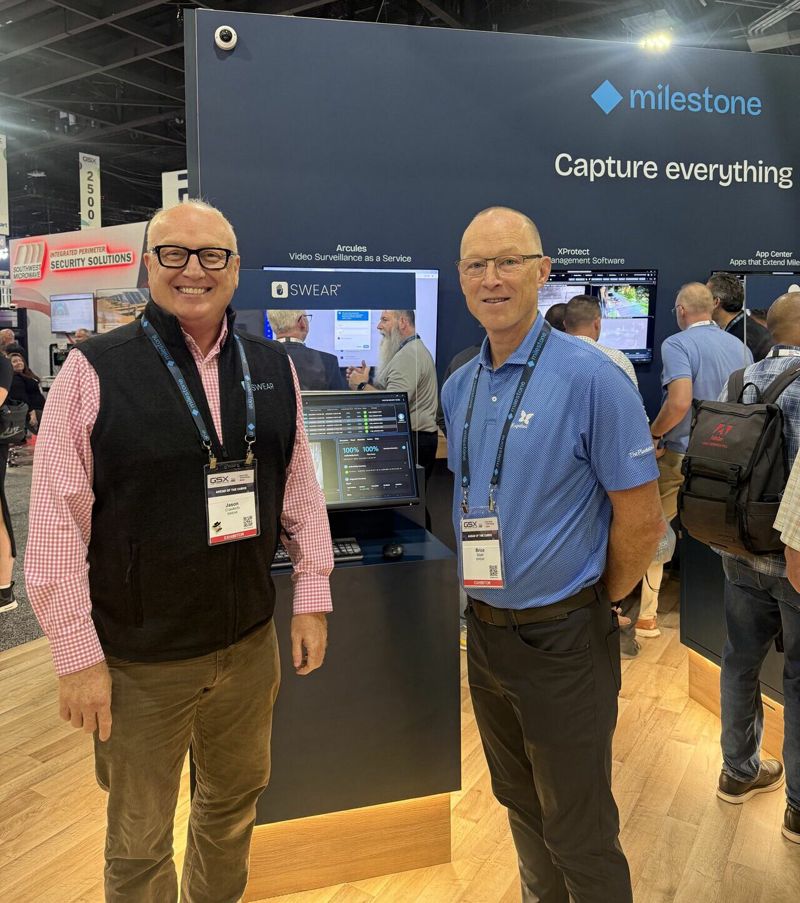
The Conversation Around Video Authenticity Is Growing
At GSX in Atlanta, one question kept coming up: How can you prove the video you rely on is real? We spent the week with our partners at Milestone Systems, showing how…
Read More: The Conversation Around Video Authenticity Is Growing
Protecting the Video Our Communities Depend On
Earlier this year, an AI-generated video depicting a crime that never happened prompted a real response from a Florida law enforcement officer. It is a striking example of how quickly manipulated video…
Read More: Protecting the Video Our Communities Depend On